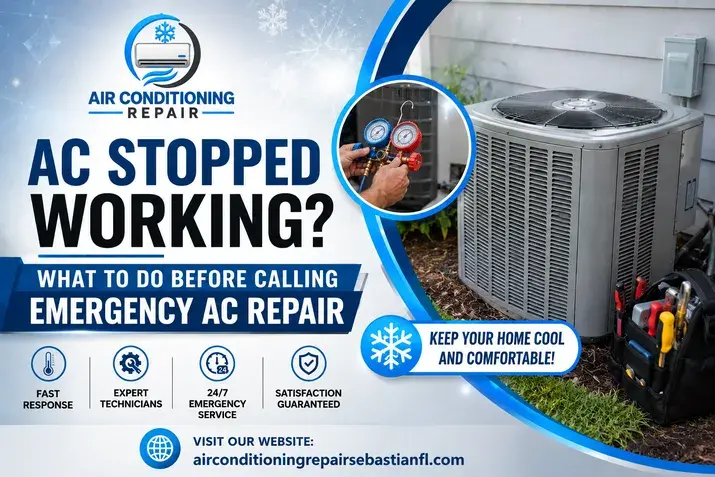
AC Stopped Working? What to Do Before Calling Emergency AC Repair
When your air conditioner suddenly stops working on a hot Florida day, it can quickly become an uncomfortable and stressful situation. Before assuming that you need a major repair, there are a few safe things you can check. Understanding the possible causes of an AC breakdown can help you determine whether the problem is simple or requires professional attention.
If you are searching for AC stopped working emergency repair, you are likely dealing with a cooling problem that needs to be addressed quickly. At Air Conditioning Repair Sebastian FL, we help homeowners understand common AC problems and find reliable solutions when their cooling system is no longer operating properly.
A sudden AC breakdown can result from a thermostat issue, power interruption, tripped circuit breaker, clogged air filter, frozen evaporator coil, refrigerant leak, blocked condensate drain, electrical fault, or mechanical failure. Some problems can be identified with basic troubleshooting, while others require an experienced HVAC technician.
Why Did My AC Suddenly Stop Working?
An air conditioner can stop working for many different reasons. Some issues are relatively minor, while others can indicate a serious equipment failure. Understanding the symptoms can help you determine what steps to take next.
A thermostat that is incorrectly configured may prevent the system from starting. A tripped breaker can interrupt power to the air conditioner, while a dirty filter can restrict airflow and cause the system to struggle.
More complicated problems can involve the compressor, condenser fan, blower motor, capacitor, refrigerant system, or electrical connections. Florida’s hot and humid weather can place considerable demand on air conditioning systems, especially when the equipment operates for long periods.
If your air conditioner has stopped working completely, begin with simple and safe checks. Avoid opening electrical panels, handling refrigerant, or attempting repairs to internal HVAC components. These tasks should be handled by a qualified professional.
Check Your Thermostat Before Calling for Repair
The thermostat should be one of the first things you check when your AC stops working. Make sure it is set to Cool and that the temperature setting is lower than the current temperature inside your home.
If you use a programmable or smart thermostat, check the schedule as well. Sometimes an unexpected schedule change can make it appear that the air conditioner is not working correctly.
A thermostat with weak batteries may also cause problems. If your thermostat uses batteries and the display is blank, replacing them may restore normal operation.
If the thermostat has power and is correctly configured but the AC still does not respond, the issue may be somewhere else in the system. At that point, professional AC troubleshooting may be necessary.
Check the Circuit Breaker
A tripped circuit breaker is another possible reason your AC won’t turn on. Locate your home’s electrical panel and check whether the breaker associated with the air conditioning system has switched off.
If the breaker has tripped, you can reset it once. However, if it trips again shortly afterward, do not repeatedly reset it.
Repeated breaker trips may indicate an electrical fault, overloaded circuit, damaged component, or another problem that needs professional diagnosis. Continuing to reset the breaker could create an unsafe situation or cause additional equipment damage.
If your AC repeatedly loses power, contacting an experienced HVAC technician is the safer option.
Inspect Your AC Air Filter
A dirty or clogged air filter can have a significant effect on your cooling system. When airflow becomes restricted, your AC may have to work harder to maintain the desired indoor temperature.
Severe airflow restrictions can contribute to problems such as a frozen evaporator coil, reduced cooling performance, and increased system strain. In some cases, the AC may eventually stop cooling altogether.
Check the air filter and replace it if it is visibly dirty. Regular filter replacement is an important part of basic AC maintenance and can help support proper airflow.
If your AC stopped cooling even after replacing the filter, there may be another underlying issue. A professional inspection can help identify the actual cause.
Check the Outdoor Condenser Unit
Your outdoor condenser plays an important role in removing heat from your home. If the indoor system is running but the house is not getting cooler, check the outdoor unit from a safe distance.
Look for obvious signs such as excessive debris around the unit. Leaves, grass, branches, and other materials can restrict airflow around the condenser and reduce system performance.
You can also observe whether the outdoor fan appears to be operating when the system is calling for cooling. However, do not remove panels or place your hands inside the unit.
The outdoor condenser contains electrical components, capacitors, wiring, and other parts that can be dangerous. If the unit is completely silent or appears to have an electrical problem, professional emergency air conditioning repair may be required.
What If Your AC Is Frozen?
A frozen evaporator coil is another common reason an air conditioner may stop cooling. You may notice ice around the indoor unit or on the refrigerant lines.
Several problems can cause an evaporator coil to freeze. Restricted airflow, a dirty filter, blower motor problems, and low refrigerant can all contribute to coil freezing.
If you notice ice, turn off the cooling system and allow the ice to thaw naturally. Do not use sharp tools to remove it or attempt to force the system back into operation.
If the coil freezes again after thawing, there is likely an underlying issue that needs attention. An HVAC technician can inspect airflow, refrigerant levels, the blower system, and other components to determine why the freezing is occurring.
Look for Water Around Your AC
Water around your indoor AC equipment should not be ignored. It may be caused by a clogged condensate drain, blocked drain line, overflowing drain pan, frozen evaporator coil, or another drainage problem.
Air conditioners naturally produce condensation during the cooling process. That moisture normally leaves the system through a condensate drain. When the drain becomes clogged, water may accumulate and eventually overflow.
Excess water can damage flooring, ceilings, walls, and other areas of your property. If you notice significant leakage, shut the system down if it is safe to do so and arrange professional air conditioning service.
Is Your AC Running but Blowing Warm Air?
An AC that runs but produces warm air can be frustrating, especially during a Florida summer. Several different issues can cause this symptom.
The thermostat may be incorrectly configured, the air filter may be restricting airflow, or the outdoor condenser may not be operating properly. Low refrigerant caused by a leak can also reduce the system’s ability to cool your home.
Refrigerant should not normally disappear from a properly functioning system. If refrigerant levels are low, a technician should determine whether there is a leak and identify the source.
Simply adding refrigerant without addressing the underlying problem is not a reliable long-term solution. Professional diagnosis is important when dealing with refrigerant-related problems.
Pay Attention to Strange AC Noises
Unusual sounds can provide an early warning that something is wrong with your air conditioner. Grinding, buzzing, rattling, squealing, clicking, or banging noises should not be ignored.
A damaged blower motor, failing condenser fan, loose component, electrical issue, or compressor problem can produce unusual sounds.
If your AC suddenly starts making a loud or unfamiliar noise and stops cooling properly, turn the system off and arrange professional service. Continuing to operate a system with a serious mechanical problem could potentially make the damage worse.
When Do You Need Emergency AC Repair?
Not every air conditioning problem requires emergency service. However, some situations should receive prompt attention.
A complete AC failure during extreme Florida heat can quickly make your home uncomfortable. Emergency service may also be appropriate if you notice a burning smell, repeated electrical breaker trips, significant water leakage, unusual mechanical noises, or other serious symptoms.
If the system presents a potential electrical or safety concern, avoid attempting a DIY repair. A qualified technician can safely diagnose the equipment and determine the appropriate solution.
For homeowners searching for emergency AC repair Sebastian, professional assistance can provide a faster way to identify the cause of a sudden cooling failure and restore comfort.
What to Expect From Emergency AC Repair
When you contact a professional for emergency AC service, the technician will typically begin by asking about the symptoms. Details such as when the AC stopped working, whether it is blowing warm air, whether the outdoor unit is running, and whether you noticed unusual noises can help with the initial diagnosis.
The technician may inspect the thermostat, air filter, indoor air handler, outdoor condenser, electrical components, airflow, refrigerant system, condensate drain, and other important parts.
Professional diagnostics are important because different problems can produce similar symptoms. For example, an AC that is not cooling could have a thermostat issue, airflow restriction, refrigerant leak, compressor problem, electrical fault, or another equipment failure.
A proper inspection allows the technician to identify the actual cause instead of simply treating the most obvious symptom.
How to Prevent Future AC Emergencies
Preventative maintenance can help reduce the likelihood of unexpected AC breakdowns. Although no system can be guaranteed to operate without failure, regular care can help identify developing problems before they become major emergencies.
Replacing dirty air filters, keeping the outdoor condenser clear, checking airflow, and scheduling professional maintenance can all support reliable operation.
Professional AC maintenance may include inspecting electrical connections, checking system components, evaluating airflow, examining the condensate drain, and checking overall cooling performance.
Because Florida homeowners rely heavily on air conditioning, maintaining the system before the hottest periods of the year can be particularly beneficial.
Emergency AC Repair Sebastian for Local Homeowners
If you live in Sebastian, Florida, your air conditioning system works hard throughout much of the year. Hot temperatures and high humidity can place additional demand on residential cooling equipment.
Homeowners searching for emergency AC repair Sebastian may experience problems ranging from sudden system shutdowns and warm air to refrigerant issues, electrical failures, frozen coils, and drainage problems.
Air Conditioning Repair Sebastian FL provides AC repair, installation, maintenance, and emergency HVAC solutions for homeowners and businesses in Sebastian and surrounding communities. Local service areas can include Sebastian, Vero Beach, Fellsmere, Micco, Roseland, Wabasso, and other nearby areas in Indian River County.
When your AC stops working unexpectedly, having access to a local HVAC professional can help you get the problem diagnosed and addressed without unnecessary delays.
Emergency AC Repair vs. Regular AC Service
Emergency AC repair and routine AC service serve different purposes. Regular service is generally scheduled for maintenance, inspections, minor repairs, and preventative care.
Emergency repair is intended for unexpected failures or serious problems that require prompt attention. A complete system shutdown during extreme heat is more urgent than a minor issue that does not affect cooling.
If you are uncertain about the seriousness of an AC problem, explain the symptoms to a professional HVAC technician. They can help determine whether immediate service is appropriate.
What Not to Do When Your AC Stops Working
When your air conditioner stops working, avoid attempting complicated repairs without the proper training and equipment. HVAC systems contain electrical components, refrigerant, capacitors, motors, compressors, and other parts that can be hazardous.
Do not repeatedly reset a circuit breaker that continues to trip. Avoid opening electrical panels, bypassing safety switches, removing refrigerant, or attempting to repair internal components yourself.
Simple checks such as verifying the thermostat, inspecting the filter, and looking for obvious signs of ice or water are generally more appropriate for homeowners.
If these basic checks do not solve the problem, professional diagnosis is the safest and most effective approach.
Frequently Asked Questions
What should I check first when my AC stops working?
Start by checking the thermostat settings and batteries if your thermostat uses them. Then check the circuit breaker and inspect the air filter. You can also look for visible ice or water around the system. If the AC still does not work, contact a qualified HVAC professional.
Why did my AC stop working suddenly?
An air conditioner can suddenly stop working because of thermostat problems, power interruptions, tripped breakers, clogged filters, frozen coils, refrigerant leaks, blocked condensate drains, capacitor failures, compressor problems, blower motor issues, or electrical faults.
Should I call emergency AC repair if my AC is blowing warm air?
It depends on the circumstances. If your AC has completely lost cooling during extreme heat, or warm air is accompanied by unusual noises, burning smells, electrical problems, or other serious symptoms, emergency service may be appropriate.
Can a dirty air filter cause my AC to stop working?
A severely clogged air filter can restrict airflow and contribute to problems such as frozen coils and reduced cooling performance. Replacing the filter may help, but persistent problems should be professionally diagnosed.
Is a frozen AC unit an emergency?
A frozen AC unit should be addressed rather than ignored. Turn off the cooling system and allow the ice to thaw naturally. If the coil freezes again or the AC continues to perform poorly, contact an HVAC technician.
How can I tell if my AC has a refrigerant leak?
Reduced cooling, longer operating cycles, ice formation, and poor system performance can be signs of a refrigerant problem. A qualified technician should inspect the system and determine whether a leak exists.
When should I call emergency AC repair in Sebastian?
Consider emergency service if your AC completely stops working during severe heat, there is a significant water leak, you smell burning, the circuit breaker repeatedly trips, or you notice a serious electrical or mechanical problem.
How can I prevent an AC emergency?
Regular maintenance, replacing filters when needed, keeping the outdoor condenser clear, maintaining proper airflow, and addressing unusual noises or cooling problems early can help reduce the likelihood of unexpected breakdowns.
Get Professional Help When Your AC Stops Working
An air conditioner that suddenly stops working does not automatically mean that you need an expensive replacement. Some problems can be resolved through simple troubleshooting, while others require professional AC repair.
Checking the thermostat, circuit breaker, and air filter can help identify basic issues. However, electrical problems, refrigerant leaks, compressor failures, frozen coils, and other complex issues should be handled by a qualified HVAC professional.
If your basic troubleshooting does not restore cooling, Air Conditioning Repair Sebastian FL can help you identify the cause of the problem and determine the right repair solution. When you need AC stopped working emergency repair or emergency AC repair Sebastian, prompt professional attention can help restore your home’s comfort and prevent a minor issue from developing into a more costly problem.
Hi, this is a comment.
To get started with moderating, editing, and deleting comments, please visit the Comments screen in the dashboard.
Commenter avatars come from Gravatar.